RSS

Tag Archives: leadership

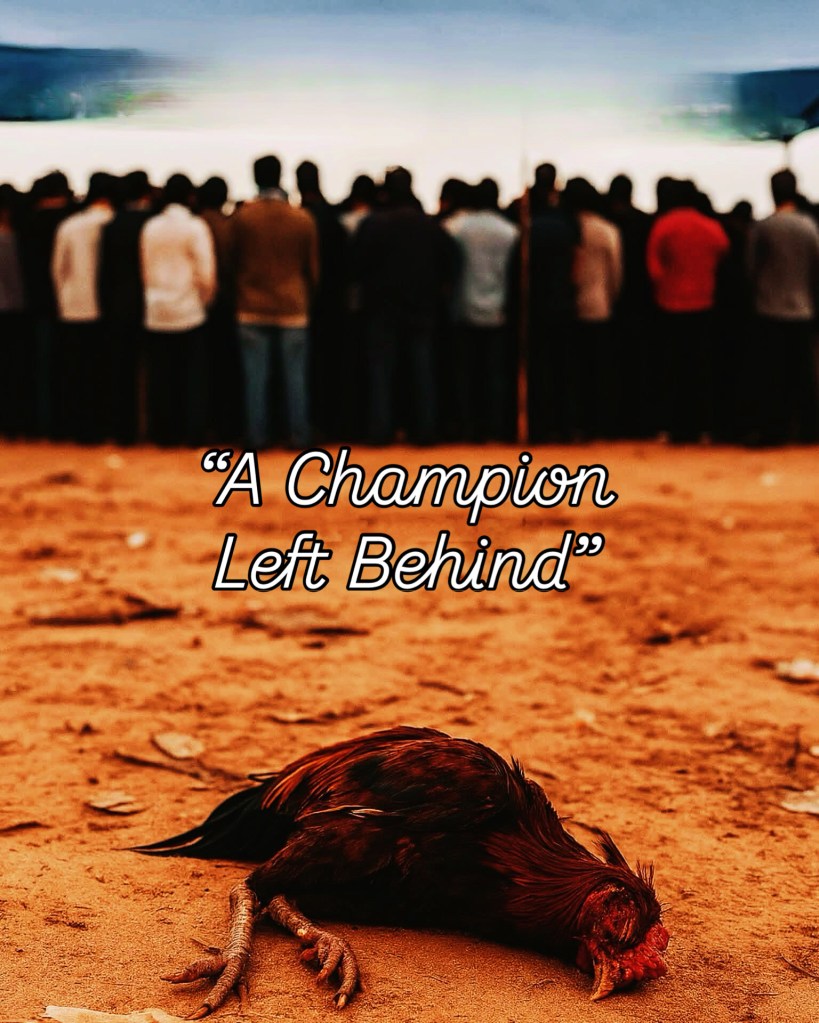
A champion left behind: applause is loud, loyalty is quiet.


Each minute of our life is a lesson but most of us fail to read it. I thought I would just add my daily lessons and the lessons that I learned by seeing the people around here. So it may be useful for you and as memories for me.

It’s easy to clap when someone is winning; it’s rare to stay when they’re not.

In two decades of my professional journey, I’ve seen the greatest fade after a single failure—despite their effort, success, and sacrifice. This is my reflection on why applause is temporary, loyalty is rare, and how leaders can show up when the winning stops.

The Rooster Story

Once, this rooster was worth millions.

Every victory brought applause, food, and comfort.

But the moment it lost, everything vanished.

No roof. No praise. No people.

Just silence. Forgotten.

Isn’t that how our professional and personal lives work too? When we’re winning, the crowd swells. When we stumble, the room gets smaller.

Applause is temporary. Character is tested in the silence after the cheering stops.

In my 20-year professional journey, I’ve watched some of the greatest of the greats fade from the spotlight after a single failure—irrespective of their effort, past success, or sacrifice.

Talent wasn’t the issue. Commitment wasn’t the issue. The issue was how quickly we, as teams and communities, move on when the scoreboard turns against someone.

Those moments shaped my leadership over the last decade.

What Failure Taught Me

  • Performance wins attention; presence wins trust. Anyone can congratulate you after the trophy. Few will sit with you in the locker room after a loss.
  • Results matter—but so do attempts. We learn more from courageous tries than from safe wins.
  • Teams thrive when effort is remembered. Recognition should not vanish with a rough sprint, a missed target, or a bad quarter.

My Leadership Commitments (and What I Expect of Myself)

  • Recognise consistently, not conditionally. Celebrate wins, yes—but also name the effort when outcomes fall short.
  • Stand by people in hard times. Reviews, coaching, resources, and cover—especially when someone is hurting or burnt out.
  • Hold a long memory for contribution. Don’t let a single failure erase years of service, loyalty, and craft.
  • Practice gratitude out loud. Appreciation shouldn’t be assumed; it should be heard.
  • Protect wellbeing as fiercely as targets. Burnout is not a badge. Recovery is part of high performance.

How You Can Lead Differently (Starting Today)

  1. Name three efforts from your team this week that deserve appreciation—regardless of outcome.
  2. Check in privately with one person who’s had a tough sprint or review. Ask, “What do you need from me right now?”
  3. Make recognition repeatable: add a 3-minute “effort spotlight” to your weekly stand-up.
  4. Track contributions over time: keep a running log so a bad month doesn’t rewrite a good year.
  5. Normalize recovery: plan rest after big pushes the same way you plan delivery.

Don’t just celebrate the wins. Stand with people when the noise fades. That’s where leadership begins.

Beyond Success

The world moves on quickly. That’s the painful truth. But we don’t have to.

In our careers, friendships, families, and teams, we can choose to be the few who stay when the winning ends. That’s how trust is built. That’s how cultures last.

If this resonates with you, pass it forward—recognise someone today for their effort, not just their outcomes.

Who stood by you when the winning stopped?

Drop their name (and a thank-you) in the comments. Let’s make loyalty visible.

If you wanna share your experiences, you can find me online in all your favorite places  LinkedIn and Facebook. Shoot me a DM, a tweet, a comment, or whatever works best for you. I’ll be the one trying to figure out how to read books and get better at playing ping pong at the same time.


Tags: , , , , , , , , , , , ,

Breaking Free from the Product Death Cycle


Each minute of our life is a lesson but most of us fail to read it. I thought I would just add my daily lessons & the lessons that I learned by seeing the people around here. So it may be useful for you and as memories for me.

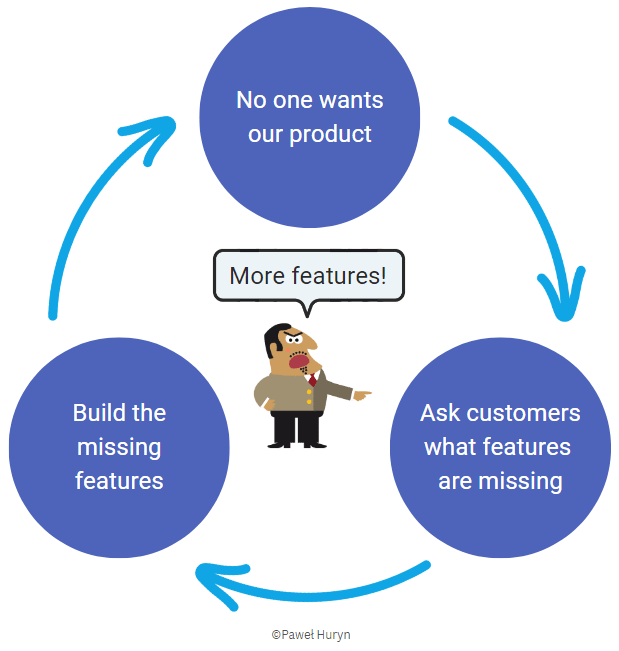
Every startup embarks on a journey fueled by great ideas and a compelling vision to create outstanding products. However, somewhere along the way, many find themselves ensnared in the product death cycle, leading to a fate of obscurity in the market.

What is Good Product Management?

Good product management typically lives at the crossroads between business goals, user or customer experience, and technology. While execution differs from organization to organization, it includes key common elements:

  • Product strategy: The long term vision of what product success looks like and how to achieve it.
  • Product development: Designing and building products based on business goals and customer needs.
  • Market launch: A product’s release (and the marketing campaigns that accompany it).
  • Continuous improvement: Long-term support to ensure that product performance improves over time.

The product death cycle can be a perilous trap, often leading product managers to become mere waiters, collecting and waterfalling “feature requirements” without addressing real problems or driving desired business outcomes. 

Escaping this trap requires a mindful approach. Here’s a roadmap to break free:

1. Respect Your Vision and Strategy

  • Define why you’re building the product.
  • Envision where you want to be in 2-5 years.
  • Identify your target audience and unique product value.
  • Align with the company’s vision and strategy.
  • Understand the jobs to be done.
  • Acknowledge the tradeoffs in customer selection.
  • Determine how the product creates business value.

2. Don’t Let Customers Design Solutions

  • Understand customer problems, needs, and desires deeply.
  • Regularly interview customers and involve designers and engineers.
  • Foster a shared understanding and remain open to diverse perspectives.
  • Recognize that valuable ideas often come from engineers.

3. Experiment to Test Your Ideas

  • Run small experiments to validate ideas quickly and inexpensively.
  • Assess key risks: value, usability, viability, feasibility, and ethics.
  • Identify what needs to be true for an idea to work.
  • Test assumptions with minimal effort.

4. Push Back on Handed-Down Solutions

  • Respect stakeholders, but challenge their authority.
  • Question solutions and push back on directives.
  • Embrace uncomfortable conversations for growth.

🛑 The Pitfalls:

  • Lack of Continuous Validation: Losing touch with the original problem the startup aimed to solve.
  • Feature Overload: Pleasing everyone results in a bloated product and delayed releases.
  • Ignoring User Feedback: Underestimating the importance of user input hinders improvement.
  • Inadequate Adaptability: Failing to evolve with market changes can lead to irrelevance.
  • Misalignment: A misfit between the product and the target market results in low adoption.
  • Business Model Viability: Ignoring the need for a sustainable business model can lead to financial woes.
  • Lack of Strategic Focus: Losing sight of the long-term vision results in reactionary decisions.
  • Team Misalignment: Discrepancies in understanding goals and priorities hinder progress.
  • Resource Mismanagement: Poor allocation of resources leads to delays and setbacks.
  • Failure to Learn: Not learning from failures perpetuates a cycle of setbacks.

Overcoming the product death cycle requires a strategic and proactive approach to product management.

The Solution: As startups, we can break free from this cycle by:

  • Continuous Validation: Stay connected to real-world needs through regular market validation.
  • Prioritizing Features: Focus on core value and iterate with a minimum viable product (MVP).
  • User Feedback: Establish robust feedback loops and be responsive to user needs.
  • Adaptability: Stay agile, pivot when necessary, and adapt to evolving market dynamics.
  • Product-Market Fit: Continuously refine the fit to address genuine market needs.
  • Business Model Viability: Assess and ensure the sustainability of the business model.
  • Strategic Focus: Maintain a clear vision and align short-term actions with long-term goals.
  • Team Alignment: Foster open communication and ensure a shared understanding of goals.
  • Resource Management: Efficiently allocate resources with realistic timelines.
  • Learning from Failure: Embrace a culture of learning and use setbacks as opportunities for growth.

Here’s a step-by-step guide on how to break free from the cycle and rejuvenate your product:

1. Reflect on Vision and Strategy:

  • Revisit the initial vision and strategy for your product.
  • Define clear objectives, goals, and a roadmap for the future.
  • Ensure alignment with the overall company vision and strategy.

2. Customer-Centric Approach:

  • Shift the focus from features to understanding customer problems.
  • Regularly engage with customers through interviews, surveys, and feedback loops.
  • Involve the entire team, including designers and engineers, in customer interactions.

3. Continuous Discovery:

  • Embrace continuous discovery to stay in tune with evolving customer needs.
  • Foster a culture of curiosity and learning within your team.
  • Use tools and methodologies that support ongoing discovery and problem validation.

4. Experimentation and Validation:

  • Prioritize experimentation to validate ideas before committing resources.
  • Run small, low-cost experiments to test assumptions.
  • Focus on key risk areas: value proposition, usability, viability, feasibility, and ethics.

5. Agile and Iterative Development:

  • Adopt an agile development methodology for iterative product releases.
  • Break down large projects into smaller, manageable tasks with quick feedback loops.
  • Embrace flexibility to adapt to changing market conditions.

6. Data-Driven Decision Making:

  • Leverage data analytics to make informed decisions.
  • Monitor key performance indicators (KPIs) and user metrics.
  • Use A/B testing to assess the impact of changes on user behavior.

7. Stakeholder Communication:

  • Maintain open communication with stakeholders.
  • Educate stakeholders on the importance of a customer-centric approach.
  • Articulate the value of strategic decision-making over feature-driven development.

8. Empowerment and Accountability:

  • Empower your team to take ownership of their work and decisions.
  • Foster a culture of accountability and continuous improvement.
  • Encourage cross-functional collaboration for holistic problem-solving.

9. Regular Review and Adaptation:

  • Conduct regular product reviews to assess progress and impact.
  • Be willing to adapt strategies based on feedback and market changes.
  • Iterate on both product features and the overall development process.

10. Seek External Perspectives:

  • Bring in external perspectives through partnerships, advisors, or external consultants.
  • Attend industry events and conferences to stay updated on trends and best practices.
  • Network with professionals facing similar challenges.

Despite readily available knowledge, many companies fall into the product death cycle. Let’s break the cycle and pave the way for innovative, impactful products.

Breaking free from the product death cycle requires a commitment to ongoing learning, adaptability, and a relentless focus on delivering value to customers. By implementing these strategies, you can rejuvenate your product and ensure long-term success in the market.

Sources: https://www.productplan.com/glossary/feature-factory/ https://userpilot.com/blog/product-feature-death-cycle/ https://www.mightybytes.com/blog/product-management-the-build-trap/ https://twitter.com/PawelHuryn/status/1658487734774951945

If you wanna share your experiences, you can find me online in all your favorite places  LinkedIn and Facebook. Shoot me a DM, a tweet, a comment, or whatever works best for you. I’ll be the one trying to figure out how to read books and get better at playing ping pong at the same time.

 
Leave a comment

Posted by on October 9, 2023 in Experiences of Life.


Tags: , , , , , , , , , , ,

𝗟𝗲𝗮𝗱𝗲𝗿𝘀𝗵𝗶𝗽 𝗟𝗲𝘀𝘀𝗼𝗻𝘀 𝘁𝗼 𝗹𝗲𝗮𝗿𝗻 𝗳𝗿𝗼𝗺 𝗮𝗻 𝗘𝗔𝗚𝗟𝗘


Each minute of our life is a lesson but most of us fail to read it. I thought I would just add my daily lessons & the lessons that I learned by seeing the people around here. So it may be useful for you and as memories for me

Eagles are my favourite birds ! For centuries, eagles have symbolised beauty, courage, bravery, honor, determination, pride, and grace. Their qualities have made them important and symbolic to humanity.

Undoubtedly, eagles rank among the largest birds of prey in the world. They are revered as living emblems of power, liberty, and transcendence. To me, they are graceful, proud, wise, powerful and focused.

Throughout history, eagles have captivated and inspired us with their remarkable leadership qualities. When one thinks of eagles, the image of a massive hunter soaring through expansive skies on outsized wings often comes to mind.

In Chinese culture, the eagle is regarded as a symbol of wisdom and strength. For the Huns, who traveled through central Asia, the eagle symbolized the ruler. Eagles were viewed as a link between terrestrial mankind and celestial deities in many cultures.

The eagle has a long-standing and rich history in cultures across the world, symbolising said power, protection, and wisdom. The reverence and respect for this majestic bird have endured for centuries, and its symbolism continues to inspire and captivate people of all backgrounds.

Eagles can teach us a few things about leadership. We take a look at the leadership lessons that our eagle friends would love to tell us about if they could.

𝟏. 𝐄𝐚𝐠𝐥𝐞𝐬 𝐟𝐥𝐲 𝐀𝐥𝐨𝐧𝐞 𝐚𝐧𝐝 𝐚𝐭 𝐇𝐢𝐠𝐡 𝐀𝐥𝐭𝐢𝐭𝐮𝐝𝐞𝐬. : They don’t fly with sparrows, ravens, and other small birds.

MEANING; Stay away from narrow-minded people, those that bring you down. You are known by the Company you keep. Eagle flies with Eagles. Keep good company. But accept that you are always ALONE at the TOP.

𝟐. 𝐄𝐚𝐠𝐥𝐞𝐬 𝐡𝐚𝐯𝐞 𝐚𝐧 𝐀𝐜𝐜𝐮𝐫𝐚𝐭𝐞 𝐕𝐢𝐬𝐢𝐨𝐧 :

MEANING; Have a VISION and remain FOCUSED no matter what the obstacles and you will succeed.

𝟑. 𝐄𝐚𝐠𝐥𝐞𝐬 𝐝𝐨 𝐧𝐨𝐭 𝐄𝐚𝐭 𝐃𝐞𝐚𝐝 𝐭𝐡𝐢𝐧𝐠𝐬 : They Feed only on FRESH PREY.

MEANING; Do not rely on your past success, keep looking for new frontiers to conquer. Leave your past where it belongs, in the past.

𝟒. 𝐄𝐚𝐠𝐥𝐞𝐬 𝐋𝐨𝐯𝐞 𝐭𝐡𝐞 𝐒𝐭𝐨𝐫𝐦 : When clouds gather, the eagle gets excited & uses the storm’s wind to lift itself higher. Once it finds the wind of the storm, the eagle uses the raging storm to lift itself above the clouds. This gives the eagle an opportunity to glide and rest its wings. In the meantime, all the other birds hide in the branches and leaves of the tree.

MEANING; Face your challenges head on knowing that these will make you emerge stronger and better than you were. We can use the storms of life to rise to greater heights. Achievers are not afraid to rise to greater heights. Achievers are not afraid of challenges.

𝟓. 𝐀𝐥𝐰𝐚𝐲𝐬 𝐓𝐞𝐬𝐭 𝐭𝐡𝐞 𝐂𝐨𝐦𝐦𝐢𝐭𝐦𝐞𝐧𝐭 𝐨𝐟 𝐭𝐡𝐞 𝐨𝐭𝐡𝐞𝐫 𝐏𝐞𝐫𝐬𝐨𝐧:

MEANING; Whether in private life or business, one should test the commitment of the people intended for partnership.

𝟔. 𝐄𝐚𝐠𝐥𝐞𝐬 𝐏𝐫𝐞𝐩𝐚𝐫𝐞 𝐟𝐨𝐫 𝐓𝐫𝐚𝐢𝐧𝐢𝐧𝐠; They remove the feathers and soft grass in the nest so that the young ones get uncomfortable in preparation for flying and eventually flies when it becomes unbearable to stay in the nest.

MEANING; *One should always be prepared to leave the Comfort Zone. There is No Growth There.

𝟕. 𝐖𝐡𝐞𝐧 𝐭𝐡𝐞 𝐄𝐚𝐠𝐥𝐞 𝐆𝐫𝐨𝐰𝐬 𝐎𝐥𝐝 : His feathers become weak and cannot take him as fast and as high as it should. This makes him weak and could make him die. So he retires to a place far away in the mountains. While there, he plucks out the weak feathers on his body and breaks its beaks and claws against the rocks until he is completely bare, a very bloody and painful process. Then he stays in this hiding place until he has grown new feathers, new beaks and claws and then he comes out flying higher than ever before.

MEANING; We occasionally need to shed off old habit no matter how difficult, things that burden us or add no value to our lives. These should be let go of.

 𝗕𝗘 𝗔𝗡 𝗘𝗔𝗚𝗟𝗘, :eagle: 𝗡𝗘𝗩𝗘𝗥 𝗘𝗩𝗘𝗥 𝗚𝗜𝗩𝗘 𝗨𝗣 

The key to success is to stay focused and work hard towards achieving your goals.
Good luck!

If you wanna share your experiences, you can find me online in all your favourite places  LinkedIn and Facebook. Shoot me a DM, a tweet, a comment, or whatever works best for you. I’ll be the one trying to figure out how to read books and get better at playing ping pong at the same time.


Tags: , , , , , ,

How to Be an Inclusive Leader


Each minute of our life is a lesson but most of us fail to read it. I thought I would just add my daily lessons & the lessons that I learned by seeing the people around here. So it may be useful for you and as memories for me.

The events of the past 17+ months have made it very clear that organizations and leaders within companies are looking to foster a more inclusive work culture. An inclusive culture is one that accepts, values and views as strength the difference we all bring to the table. Achieving Inclusive culture, isn’t something that can happen overnight, it can happen — by resetting workplace dynamics and implementing inclusive practices with the support of Inclusive leadership.

Building a culture of inclusion isn’t like turning on a light switch. Companies increasingly rely on diverse, multidisciplinary teams that combine the collective capabilities of women and men, people of different cultural heritage, and younger and older workers. But simply throwing a mix of people together doesn’t guarantee high performance; it requires inclusive leadership — leadership that assures that all team members feel they are treated respectfully and fairly, are valued and sense that they belong, and are confident and inspired. 

How inclusion affects your teams

Research from BetterUp shows that 1 in 4 employees don’t feel like they belong. That’s across companies, industries, and demographics. Imagine what it is for underrepresented employees.

When people don’t feel included, the cost is deeply personal. It also hurts the team. They don’t show themselves. They might hold back opposing or counterintuitive ideas and not participate in working sessions for fear of falling further out of the group. They don’t feel comfortable that their ideas and comments will be taken with the same openness and seriousness as anyone else’s. They don’t bring their unique personality, background, and interests into conversation.

They don’t take big risks or achieve big results. They don’t get noticed. They censor themselves. The cost to the team? Employees who feel excluded are 25% less productive on future tasks, have a 50% greater risk of turnover, and are less willing to work hard for the team. 

The feeling of being included comes from all of a person’s interactions, not from policy. Our data shows that the direct manager has the biggest impact. They need to be more deliberate, especially for people who feel demographically dissimilar from others in the organization and experience 27% less psychological safety as a result. 

Only 31% of employees believe their leaders are inclusive. That is, less than a third of employees believe their leaders see, value, and respect them as a whole person. Unwanted attrition, especially among employees from underrepresented groups, is an ongoing problem. Those valuable employees leave, and with them, their potential, as well as the insight about the ways the environment, culture, and leadership aren’t working. 

Most leaders and managers don’t set out intending to exclude others. Yet, in the course of pursuing a goal and relying on sometimes outmoded beliefs about leadership, they fail to get the best out of their teams. Worse, they might not even realize it. 

As you work to become a more inclusive leader, keep these experiences in mind. Not every underrepresented person will have these experiences, of course, but they are common and worth remembering as you work on demonstrating more inclusive behaviors. If individual leaders are inclusive their teams will feel safe and trust them and then they will perform better.

What is Inclusive Leadership?

Inclusive leadership is emerging as a unique and critical capability helping organisations adapt to diverse customers, markets, ideas and talent. An inclusive leader sets the tone and models the behaviors for their team to create an environment where each person feels seen, valued, respected, and able to contribute — in short, where they feel they belong and are included. 

Inclusive leadership is about actively creating an environment in which all members of your team feel empowered to contribute and feel safe to be themselves. While the tactics vary depending on the situation, at a high level, it means demonstrating empathy for team members and customers, advocating for colleagues with less institutional power, increasing your cultural and emotional intelligence, and establishing a culture that values (rather than merely accepts) diverse perspectives.

Diversity is all around us but it is up to leaders to decide whether or not to make full use of the diversity in their organisation. Inclusion is about fostering the structure, culture and mindset in an individual and leader, that enables that person to say, I fit in here, I feel valued, and I can be my true self and do not have to hide parts of my character – and because of this I can contribute to this organisation.

Lots of articles about inclusive leadership list personality traits of inclusive leaders, but that’s not the approach I take here. I believe anyone can (and everyone should) demonstrate inclusive behavior, so I focus on actions that will help develop your inclusive leadership style.

Tips for Becoming a More Inclusive Leader

What can you do to improve your inclusive leadership style? Here are a few places to start:

Reflect

I invite you to start paying attention to your own frame of reference.  Consider how your background affects the way you show up at work. Think about the ways your education, race, gender, age, physical or mental health all come into play. How comfortable are you discussing those things at work? How comfortable are your reports doing the same? 

Build trust

Inclusive leaders trust their people. They are totally committed to ‘we’ before ‘me’. If your people have to trust you as a leader you have to trust them to bring their expertise to work. Fostering trust will enable your people to feel safe and willing to contribute their unique perspectives

Slow Down

In a world where “Move fast, break things” is printed on company walls, it can feel radical to ask someone to slow down. But a few minutes of planning and thought can go a long way. Speed and spontaneity are rarely inclusive—they rely on ingrained habits, not empathy and understanding. Build new, more inclusive habits and you’ll still be able to iterate quickly without asking your underrepresented colleagues to bear the burden. 

Relationship Building

Inclusive leadership cannot be transactional. Inclusive leaders invest time in building real relationships with their team members, peers, and other employees, getting to know what matters to them and what they need to be successful. They know that each employee is a whole person who has more to offer than just the task or output they are delivering today. 

Building relationships goes beyond tolerance or accommodation. Inclusive leaders know the importance of not just being seen, but being understood and appreciated, for their whole self. 

Ask Questions

Don’t be afraid to ask questions: How do you pronounce your name? Am I addressing you the way you’d like to be addressed? How am I doing? Is there anything more you’d like to discuss?  You can’t read your employees’ minds, but you can make the space for discussion to happen.   Tip: Consider anonymous options for collecting feedback, paired with public acknowledgment and commitment to improve—remember, your employees don’t always know if they’ll have backup and may not be willing to share right away.)

Recognition

Inclusion is proactive. Inclusive leaders make an effort to recognize people for their work and support their efforts and growth. That means recognizing specifically and personally the unique contributions of others in ways that are motivating and elevate their sense of personal accomplishment. Individualized recognition and support let employees know that the skills and experiences they’ve contributed and the risks they’ve taken are seen and valued.

Encouraging participation

Inclusion is an invitation, extended day after day. Inclusive leaders use a variety of approaches to seek input and feedback directly from people who might not speak up. and check- in on what people need to be successful. They also stay attuned to obstacles that might get in the way of participation — not just in meetings but in the way work gets done — and look for ways to minimize these obstacles. 

Focus on Culture Add, not Culture Fit 

A diverse team is smarter and does better work. So why focus on whether or not someone also likes craft beer and board games? Reframe the conversation so your hiring plans can look for what new and exciting perspective someone brings to your team. As my own manager Drew Gorton puts it, “If you want better results, surround yourself with people who are meaningfully different from you.” 

Empathy

Creating an inclusive space requires having an appreciation for where others are coming from and what they might be experiencing. Inclusive leaders are warm and encouraging in their interactions, embracing compassion in order to foster deeper connections with others. They make an effort to stay connected to the daily pulse of what is going on for employees and whether they are feeling seen, valued, and respected. When a leader prioritizes empathy and models nonjudgmental behavior, it helps everyone feel more able to share their experiences and state of mind.

Fair

Inclusive leaders treat people equally in terms of opportunity and fairly according to ability. We can only do this if we know our people. Curiosity is a trait of the inclusive leader. One way to check how to be fair is by substitution. Substitute one group for another when you are looking at questions for an interview or the language you are using. 

Social connection

Interactions with other people drive our sense of being included. Inclusive leaders encourage people to recognize each other as humans, not just co-workers or adjoining parts of a process. They create opportunities for people to engage with each other — both in and out of work — to deepen their connections and model the importance of maintaining close personal relationships with supportive people in our lives.

Alignment 

Inclusion means being able to do your best work. Inclusive leaders provide shared vision and clarity to guide others. They set their people up for success and create avenues for contributing to the larger outcome. Inclusive leaders also make space for people to find their own meaning and purpose. When employees know what the organization and team are driving toward and what matters most to the organization’s success, they can better determine how best to contribute. 

Inclusion is not just about diversity. It’s about competitive advantage. And it’s a choice.

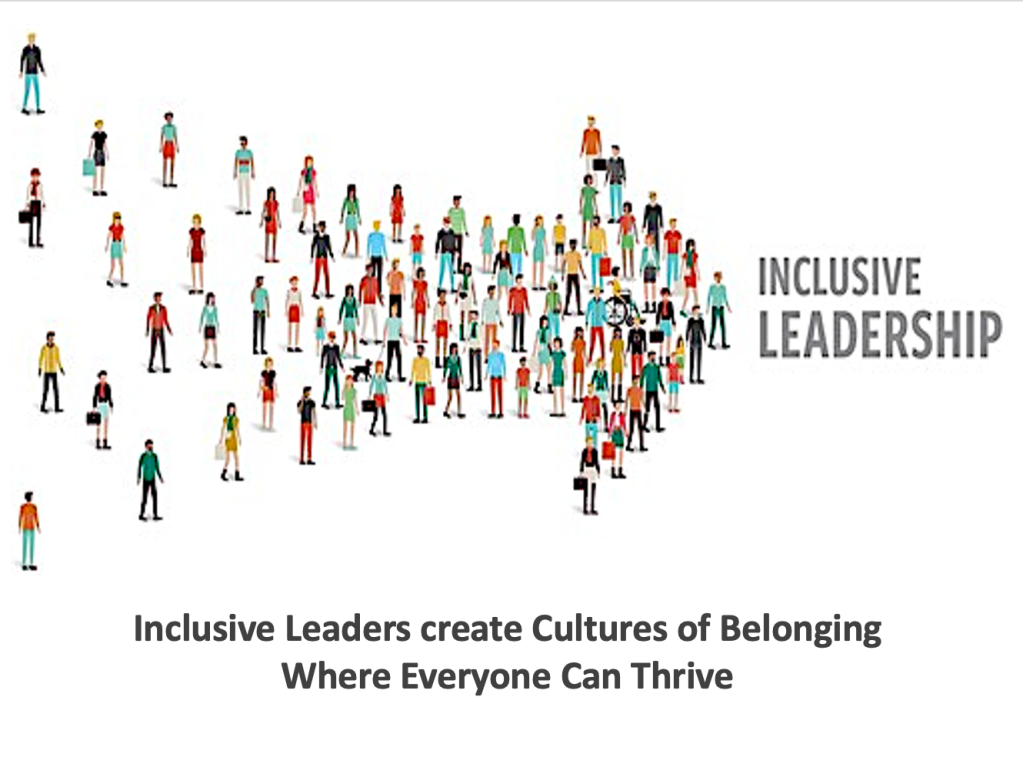
Your Role as an Inlusive Leader is Creating Cultures of Belonging Where Everyone Can Thrive.

Remember, Actions Matter 

Your actions as a leader matter. Maybe you’ve never had formal leadership training—many of us haven’t!  Whether or not you intended to end up as a manager, a team lead, or an open-source maintainer, you now hold the power to materially improve the lives of the people around you. It doesn’t matter if you don’t want this power.  As long as you are in a leadership position, it is yours and you can use it for good. 

As leaders we must remember: our teams are watching our behavior to know what is and is not acceptable. If we turn a blind eye to harassment, harassment will flourish. If we turn a blind eye to microaggressions, microaggressions will flourish.  

On the other hand, if we do a good thing, others will follow our example. If we hold ourselves and others accountable, our team will, too. If we take the time to use the right pronouns, or have an inclusive holiday celebration, our team will know it’s okay to do the same. And that’s a magical thing. 

Please feel free to share your story and any lessons you learned, you experienced, you came across in your life in the comments below. If you enjoyed this, or any other other posts, I’d be honoured  if you’d share it with your family, friends and followers!

If you wish to follow my journey outside of my writing, you can find me on Facebook (https://www.facebook.com/MunnaPrawin) Instagram(MunnaPrawin) and Twitter(@munnaprawin1)
 

Tags: , , , , , ,

Leadership Starts with Simply Being a GOOD Person


Each minute of our life is a lesson but most of us fail to read it. I thought I would just add my daily lessons & the lessons that I learned by seeing the people around here. So it may be useful for you and as memories for me.

It doesn’t matter if you are running a business, managing a team, or teaching a class–leadership skills are important. Some people seem to be born knowing what to do to inspire and lead people, but for most of us it doesn’t come that naturally.

Being good is all about our core VALUES as a person.  Every one of us has a set of core values.  Our values have been built from a young age into adulthood.  From day one, the people that have raised us, our parents, relatives, guardians, and friends, have been IMPRINTING values upon us.  When you were young and impressionable, you were just young and impressionable. 

Not everyone will become a great leader, but everyone can become a better leader.

What makes some people excel as leaders often feels shrouded in mystery. You can read about leadership, research it, and talk about it, yet the interest in leadership alone will not necessarily teach you how to be a good leader.

You will have more information than the average person, but learning effective leadership is lifelong work. It requires experience – and lots of it. Most importantly, it requires observation and a commitment to action.

Remember words like these: “Show respect for your sister; that type of behavior may be okay for your friends, but not you; do your chores, everybody does their role in this family.” Those words instilled the values of respect, strength, and hard work. Take a minute and reflect on words you may remember from your childhood. Now let’s fast forward from your childhood to, if appropriate, parenthood. As a parent, have you ever heard your parents voice come out of you as you talk to your kids?  Most parents have, and it’s cute and scary all at the same time. 

In living and leading a fearless life, values are an integral part of navigating and overcoming fear.  In life, when things are good our values are beneficial and positive. However, when a crisis strikes, tragedy sets in, a roadblock is thrown up, and the value of your values skyrockets. I’ve always felt that you learn more about a person when the chips are down. During challenging times our values can be our bedrock, our lightpost and something that carries us through the challenge. 

It is really interesting to reflect back on the first global crisis I had to lead a company through.  It was September 11th and I was in the middle of a capital raise to keep our company alive.  It was also on the heels of the Internet Bubble bursting.  I was leading a struggling tech company in Silicon Valley that was running out of money and America just got hit by terrorists.  In fact, on September 11th we had investors from New York and Chicago in our offices in California and we became their hosts for over a week as all planes were grounded. 

In the face of adversity, the values that immediately struck were STRENGTH, COURAGE and FAITH.  Just a day earlier the company relied on its own strength, but today the company needed mine.  Everyone was shaken, and I don’t mean professionally.  We were all shaken personally and as Americans we were literally numb. As a company we pulled together for our employees, served our clients, but more importantly served our community, all while we were struggling and running out of cash.  We were courageous in the face of fear and had faith that if we did the right things, good things would happen to us. We made it through September 11thstronger as a company and closer as a family.  And our Fearless Leadership was rewarded with a successful capital raise and the company stayed in business and grew. 

The lessons I learned during that crisis I have been able to apply at other times in my career – during the financial meltdown of 2008-2009 and most recently during the global pandemic we are all experiencing. In all of these instances, I have lived and learned that simply waking up and being a good person is perhaps the biggest part of being a steady and consistent leader during troubled times.

Final Thoughts

Learning how to be a good leader, first and foremost, is an inside job. You must focus on growing as a person, regardless of the leadership title that you hold. You cannot take others where you yourself have not been. So focusing on yourself, regardless of your time or where you are in your career, will have long term benefits for you and the people around you.

Being a Fearless Leader is built on being a good person and living your core values. Values are great in good times, and they are literally the super-glue during the tough times. 

Author: Brendan P. Keegan

Please feel free to share your story and any lessons you learned, you experienced, you came across in your life in the comments below. If you enjoyed this, or any other other posts, I’d be honoured  if you’d share it with your family, friends and followers!

If you wish to follow my journey outside of my writing, you can find me on Facebook (https://www.facebook.com/MunnaPrawin) Instagram(MunnaPrawin) and Twitter(@munnaprawin1).


Tags: , , , , ,

 
Design a site like this with WordPress.com
Get started