RSS

Monthly Archives: November 2022

The year 2022 isn’t over yet. End on a high note


Each minute of our life is a lesson but most of us fail to read it. I thought I would just add my daily lessons & the lessons that I learned by seeing the people around here. So it may be useful for you and as memories for me.

As we approach the end of the year and plan for a new one to begin, most of us enter a phase of reflection. We assess the goals we set to achieve throughout the year. We look at the highs and lows we faced over the past months. We see the things we did do, what we never had a chance to do, and the things that happened organically that we never expected.

The year 2022 was supposed to be a great year. It is the first first full year after Covid Pandemic.This year has been one, never-ending road. It’s had some straights and has been filled with hairpin bends, but the final corner is coming up.

Do a quick year-end review.

Write down everything that went right with your year. There were probably some good moments. Highlighting them can help you package 2022 up and swiftly move on.

Maybe you graduated, landed a new/better job, welcomed a baby into the world, adopted a new pet, or quit a bad habit. Those are all amazing victories! Celebrate them! Take yourself out on a date, buy yourself something pretty, or do a little victory dance in your living room.

I just want you to look back over the last year and think about three things that people smarter than me have been thinking about for decades: What do I want to start doing? What do I want to stop doing? What do I want to keep doing? As you reflect on the year, what’s something new you want to try? What’s something old you want to stop? What’s something great you want to keep doing?

Don’t beat yourself up.

 You might have set ambitious goals for yourself at the start of the year that you now realize you’re not close to reaching as the year comes to a close. Hey, it’s okay! We can’t always reach every single goal we set for ourselves.

Assess why you didn’t reach your goal(s). Maybe you needed more time? If so, extend it as a resolution for next year! Maybe it was too ambitious? If yes, consider adjusting it to be a more realistic goal.

There’s no need to harp on yourself for failing at something. Failure does not define you. It’s part of life. Learn from it, grow from it, and move forward.

Make Adjustments, If Needed

As you reassess your goals, adjust them if it makes sense. Try to ensure all goals are SMART : Specific, Measurable, Achievable, Realistic, and Time specific. If you decide to be a little bolder with your goal setting, also be realistic about what you can do well—or at all—given the time you have between now and year-end.

If overwhelm starts to occur, take it down a notch by asking yourself and a trusted colleague “If this goal is going to happen by year end, how can I most easily make that happen?” By talking through the solution with someone else, you may be able to find solutions that would not have come up otherwise.

End the year with generosity

One of my goals is to be as generous as the portions of fries they give you at Five Guys. Have you ever ordered their fries? That cup overfloweth! Sometimes, in the midst of a busy year, I’ve overlooked opportunities to be both grateful and generous.

As I review the last 12 months, I always discover reasons to be grateful. I notice good things that I missed the first time around because I was hustling so fast. This gratefulness then tends to turn into generosity, as I look for new ways to pass on the gifts that have been passed on to me.

Gratefulness changes me. Generosity changes the world.

Ask a friend one small question.

The end of the year can be stressful for a lot of people. There’s family drama, year-end work projects, holiday expectations, and a swirl of other emotions stacked into this season. Reach out to one friend and ask this question: “Is there anything you need?”

Why does asking this question matter? Because when you ask someone what they need, they become visible and valuable. That’s what everyone in your life wants to know. “Do you see me? Do I matter?” A little question like that can have a significant impact, especially after a stressful year. Crisis magnifies kindness. The small things you do for your relationships this season are worth 100 times what they were two years ago because we’ve all been so isolated. Ask that one small question and then don’t be surprised if it leads to a big conversation.

Get Clear On What You Will STOP Doing

As you are put together a clear plan to reach your goals, be as clear about what you will stop doing as what you will start doing…especially if you have a tendency to try and do too much!

Remember Your Self-Care

For peak performance as you end the year, schedule planned rest periods. “All work and no play is not the true champion’s way.”

Unless you stay physically and mentally strong through year end, achieving your goals won’t mean much. And stress can derail even the best of efforts and intentions.

But, Don’t Forget to Have Fun

By refocusing your efforts, you may be able to achieve significant progress on a couple of key initiatives, rather than finishing the year with a stack of unfinished business. It will make the end of the year a time for celebration, rather than a calm environment before a chaotic return to work.

With all of that being said, perhaps the best way to end the year is to celebrate. Although there isn’t much to celebrate, there is joy in knowing this awful year is coming to an end.

Set the Stage for Next Year

As long as you live, there will always be a next year to do things differently. A new chapter. A new blank canvas to draw on.

Whatever metaphor works for you, own it and make it yours. Learn from this year and turn your disappointments into action items to take into the new year.

We don’t have to own the negatives or carry them with us any longer. If something doesn’t serve you, set it free. Vow to make next year better in whatever way(s) you can. Create a plan that is actionable and realistic. Even if you end up straying from it, it’s better to create a road map that you can aim for and hope for the best.

Focus on the four components every great goal requires.

The goal nerd in me can’t help it. I can’t end this list without giving you a set of specific tools. Goals are not complex. They always involve the same four components: results, actions, time, and motivation.

Results are what you flirted with in item number four on our list. What do you want to accomplish? Actions are the physical steps you’ll take to make those results happen. What will you do? Time is everything from the deadline you pick to finish your results to the hours you plan to invest. Motivation is the fuel, fire, passion, or drive that will keep you going way beyond January 1. Most people are okay at dreaming about results but neglect the other three. We’re not most people though. We finish this last year strong and start the new one even better!

Make actionable goals for the new year on the things that you did not follow through with. Set new goals and achieve them in the coming months. Life is a journey, not a checklist. You can’t do everything or be everything all at once. Take it day-by-day.

“If you’re not working hard, ideas don’t matter. The best idea is worthless without execution.

If you’re already working hard, ideas are crucial. Most effort is wasted on mediocre ideas.”

Don’t over-improve your weaknesses. If you’re not good at something, work on it until it no longer prevents your progress, but the bulk of your time is better spent maximizing your strengths.

You’ll see the progress unfolding as time goes by. Trust me, your year was not as horrible as you think it was. End it on a high note!

I hope you had a wonderful 2022. It’s not over yet though — you’ve still got a chance to finish strong. When you do, let me know how it went. Hopefully, your end of year reflection is full of positives, even among the negatives. You can find me online in all your favorite places  LinkedIn and Facebook. Shoot me a DM, a tweet, a comment, or whatever works best for you. I’ll be the one trying to figure out how to read books and get better at playing ping pong at the same time.

Finish strong by giving a year-end gift to help kids and change the world through generosity Give a Gift. Change a Life.


Tags: , , , , , , , ,

Taking Breaks At Work is My Success Secret  


Each minute of our life is a lesson but most of us fail to read it. I thought I would just add my daily lessons & the lessons that I learned by seeing the people around here. So it may be useful for you and as memories for me.

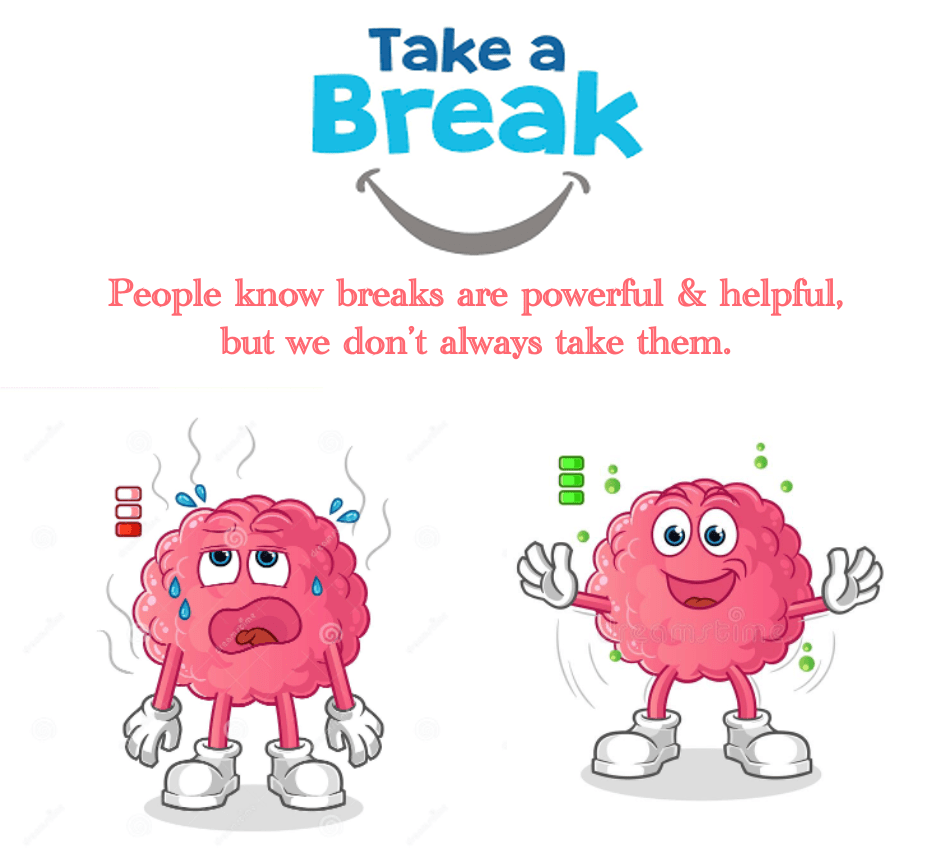
I strongly believe in the concept of Pause is Power. Like me, People know breaks are helpful, but we don’t always take them. Take your mind off work to give your brain a chance to truly relax.

We are living in competitive world. Competition comes with great pressure and intensity, and it’s important to remind people of the power that can be found in the simple act of a pause, allowing us to come back better and stronger.

Taking break is not a crime. We have to make sure to Prioritise Wellbeing Over Winning.

You don’t want to take breaks because you think you can get more done. But did you? One day you will started realizing that your neck, wrist, and back are hurting, despite being an otherwise health-conscious, active lifestyle advocate.

Remember that, We work best when we adhere to our natural rhythms, which dictate switching between periods of expending energy and periods of renewing energy.

Elite musicians, actors, and athletes know this well enough and rarely practice for longer than 90 minutes in one session. They take breaks between sessions, and rarely work/practice for more than 4.5 hours in any given day.

Basically, microbreaks help you manage your energy resources over the course of the day — and that’s particularly beneficial on days when you’re tired. We Need to Get Serious About Taking Breaks At Work

“Almost everything will work again if you unplug it for a few minutes…including you.” – Anne Lamott

Science Agrees: More Breaks = Higher Productivity

Many people experience “productivity breakthroughs” after going against their instincts to meet a deadline by taking a pause. We emerge refreshed and more resilient after getting up for both brain and movement breaks.

So, how do breaks help us? 

Here’s a quick look at the magic taking breaks does to our brain:

  • Improved focus.
  • Boosted creativity and problem-solving abilities
  • Better information retention
  • Improved productivity
  • Prevents decision fatigue
  • Reevaluate goals and seeing the bigger picture
  • Better stress management

Besides the juicy benefits that breaks have on our brains, now what if you can double the benefits? 

It’s simple – add movement to your breaks.

For those who get the least amount of physical activity, replacing a half hour of sitting time with physical activity was associated with up to a nearly 50% reduction in mortality, according to a new study from the American Cancer Society.

Breaks are a great opportunity to incorporate movement into our workdays to combat the setbacks of a sedentary lifestyle. 

Take a look at the most important benefits of movement breaks:

  • Improve energy levels
  • Boost mood and relieve stress
  • Strengthen weakened muscles and bones
  • Reduces the risk of developing type 2 diabetes and cardiovascular disease
  • Reduces the risk of injury
  • Boost memory and focus

It’s pretty clear that taking breaks is a powerful tool that can make us better at what we do, feel physically better, and happier. 

High-performing people understand the power of taking breaks and know how to take advantage of effective breaks to become more productive while keeping their health in check.

So, how do you harness the power of taking breaks, so that you come back fully recharged both physically and mentally?

Continue reading to find out the strategy that actually works.

How to Work Like an Expert and Maximize Your Productivity

If we want to work like an expert and maximize our productivity, we need to learn from elite performers. Here’s the recipe:

  1. Work in sprints: Give it all you’ve got for short periods of time. Get as much done during that time as possible. Push hard.
  2. Take frequent recovery breaks: In-between work sprints you need to recover and replenish some of your energy.

That’s it. You’re either working super hard – deeply focused, fully engaged, highly concentrated, at full speed – or you’re taking a recovery break.

There’s no more in-between. There’s no more ‘doing some work’. There’s no more preserving energy when you’re working. There’s no more half-assed working because you’re tired or whatever. You either work (you’re super productive) or you don’t (you’re taking a break). You’re either expending energy (work sprint) or replenishing energy (recovery break).

That’s working according to your natural rhythms and it’s exactly how the highest performing people in the world do it.

Now, How long should those work sprints and recovery breaks ideally be?

If you want to copy the best, then the ideal length seems to be working for 90 minutes and recovering for 15 minutes. (That way you also adhere to the ultradian rhythm.)

For most people, however, that’s not very practical. You may have a meeting coming up, co-workers interrupting you, or whatever. What’s important is that you either work or recover. Don’t do some half-working/half-chilling stuff.

Sometimes you may have a work sprint that only lasts for 30 minutes. Or one that lasts for 80 minutes. Or heck, even one that goes on for 2 hours. Similarly, some breaks may only last 10 minutes, or 5 minutes, or 40 minutes.

Don’t overcomplicate it. The key is to make waves and follow periods of intense activity with periods of intense recovery. If you work, work hard. If you take a break, recover properly.

Do that and your productivity will go through the roof. There are a few strategies that’ll help you make your work sprints as productive as possible.

1) Give it all you’ve got.

2) Eliminate all distractions

3) Single-task and work on one task, uninterruptedly, for long periods of time

4) Take mini breaks every 30 minutes.

Forcing the brain to stay hyper focused on work throughout the workday lessens productivity. The solution to this is to take regular breaks so you can refresh both physically and mentally several times a day. Doing so will not only make you more productive but help you prevent job burnout too.

Managing breaks at work

Do you know the difference between some of the best tennis players and average tennis players? One difference is that top players are maximizing their recovery between points.

Here the point is that getting the most out of your recovery breaks is crucial if you’re looking to maximize your productivity. Yes, taking any break is better than not taking breaks at all. But there are better and worse ways to spend your time during breaks.

Watching TV, reading the news, or checking your Facebook newsfeed won’t give you the highest possible returns from your recovery breaks.

Instead, you may want to choose one of the following activities:

  • Get in nature
  • Boost your mood
  • Meditate
  • Walk or exercise
  • Leave the office 
  • Have a healthy snack/meal 
  • Have a brief nap (if you’re allowed) – if not, try some deep breathing 
  • Meditate/daydream 
  • Do something creative – like a puzzle, or doodling 
  • Have a coffee or tea 
  • Create a to-do list for your home-based tasks 

It has become increasingly clear that taking breaks at work helps keep you healthy and productive. Both are important for working individuals to continue to do a good job as well as take care of themselves. Burnout at work is a real problem and employees need to be able to practice reasonable self care so things never escalate to that point. Here are just a few of the reasons why taking breaks at work keeps your productivity levels high.

When people think their employer cares about their health, they feel more empowered to freely make decisions about when to take microbreaks and what type of microbreaks to take,And that is ultimately good for both the employer and the employee.

Final Thoughts

While there are many options for breaks at work, individuals are unique and have to find out what works best for them. Try to make a note of what sort of break benefits you the most – if you can continuously make use of it, your motivation and productivity will stay high.  

Now I’d love to hear from you. What’s your experience with taking regular breaks at work? Let me know in the comments below, and thanks for reading!

References:

https://www.coca-colacompany.com/

Homepage

https://www.stretchminder.app/post/taking-breaks-at-work-the-ultimate-guide

Please feel free to share your story and any lessons you learned, experienced, you came across in your life in the comments below. If you enjoyed this or any other posts, I’d be honored if you’d share them with your family, friends, and followers!

If you wish to follow my journey outside of my writing, you can find me on LinkedIn and FacebookEdit


Tags: , , , , , , ,

The Mexican Fisherman Story – What really Matters in Life?


Each minute of our life is a lesson but most of us fail to read it. I thought I would just add my daily lessons & the lessons that I learned by seeing the people around here. So it may be useful for you and as memories for me.

This Small Story Of ‘ Life Of A Fisherman’ Tells Us The Importance Of Hard Work & How To Live A meaningful Life Beating All Odds!

The short story of The Mexican Fisherman was originally told by Heinrich Böll about an encounter between a tourist and a small fisherman on a European coast.

It’s one of my favorite stories – The Parable of The Mexican Fisherman. It’s short, fun, and packs an important message.

I remember first hearing this inspiring story when I was in my “dream school i.e. Noble Public School, Andhra Pradesh, India in 1990s”. I shared the story with my students to encourage them to keep perspective about pursuing what makes them most passionate in life … and why.

The more I shared this story with others, the more I realized how much perspective I had lost myself. Soon thereafter, I moved away from my school to pursue higher studies and then I continued to share that inspiring and meaningful story till date. A lot of people thought I was crazy.

Here is the story…

A tourist went to Mexico and praised the local fishermen for the quality of their fish and then asked them?
How much time do you need to catch it? And the fishermen answered him in one voice:
“Not long”
He asked them: Why don’t you spend more time and fish more?
The fishermen made it clear that their little catch would suffice their needs and the needs of their families!
He asked them: But what do you do in the rest of your time?
They answered:
We sleep late..
We fish a little…
We play with our children.
We eat with our wives.
And in the evening we visit our friends..
We have fun, laugh and chant some songs
The tourist interrupted:
I have an MBA from Harvard University and I can help you!
You have to start fishing for long periods every day..and then sell the extra fish for a bigger return
And buy a bigger fishing boat 00
They asked him: Then what?
He replied: With the big boat and the extra money..
You can buy a second and third boat, and so on until you have an integrated fleet of fishing vessels,
Instead of selling your catch to an intermediary, you will negotiate directly with the factories, and perhaps you will also open your own factory,
And you will be able to leave this village and move to Mexico, the capital, or Los Angeles or even New York!
From there you will be able to start your giant projects
The fishermen asked the tourist:
How much time will we need to achieve this?
He replied: About twenty or maybe twenty-five year
They asked him: What next?
He replied with a smile: When your business grows, you will speculate in stocks and win millions 00
They asked him in amazement:
Millions? Oh really ?
And what will we do after that?
replied:
Then you can retire
And live quietly in a village on the coast, sleep late..
You play with your children.
And you eat with your wives.
And spend the nights enjoying with friends.
The fishermen answered
With all due respect and appreciation
But that’s exactly what we’re doing now,
So, what is the logic for which we waste twenty-five years of misery?

I love this simple parable. So, what does this story mean for you?

It brings clarity to what the money game is all about… and definitely not about.

It brilliantly illustrates the illusions we so easily fall into when pursuing wealth and financial freedom. It’s far too easy to build incessantly and forget the end game is happiness and a fulfilling life.

It’s equally easy to forget all the goodness we’re surrounded by today.

The truth is, it doesn’t take a lot of money to have a truly wealthy life, but it does take freedom.

So here are some questions for you to ponder as you develop your own life plans for financial freedom:

  • What does financial freedom mean to you? How will it change your life?
  • What do you really need to be happy and fulfilled?
  • How much money do you need to retire?
  • Would a simpler life allow you to retire sooner?
  • What’s the price you pay for simplicity? Complexity?
  • If you died tomorrow, what unfulfilled dreams would you regret having never lived?
  • What’s keeping you from living those dreams today?

While it may be a source or importance, power, and prestige to build what is analogous to a large fishing empire, you need to ask yourself what the end goal of all this is in the first place. Is there a quicker route to your goal? Is there a way that you can take the journey to success and enjoy the fruits of success along the way? How can you strategize this to live a happier, fuller life each and every day (or at least as much as possible)?

Is there something you can simplify in your life today to enjoy some of the reward you may be working so hard to earn? What matters most in your life? Have you lost sight of it while chasing down other goals? Have you become distracted?

Give yourself the gift of a few minutes to drop everything and ponder on this concept and these questions. Pausing and taking a few moments right now may set your life on a trajectory toward a brighter and happier future.

I love you. Thank you for letting me share this inspirational story with you. Please come back for more.

Please feel free to share your story and any lessons you learned, experienced, you came across in your life in the comments below. If you enjoyed this or any other posts, I’d be honored if you’d share them with your family, friends, and followers!

If you wish to follow my journey outside of my writing, you can find me on LinkedIn and Facebook


Tags: , , , , , ,

BEWARE Black Friday is coming


Each minute of our life is a lesson but most of us fail to read it. I thought I would just add my daily lessons & the lessons that I learned by seeing the people around here. So it may be useful for you and as memories for me.

Black Friday 2022 is almost here, and in the run-up to the huge sales day an alert has been put out about scams and tricks that shoppers need to be aware of. Taking few precaution steps could help you save a lot of time, money and stress – gives shoppers help on phishing scams, e-mail security and where best to spend their hard-earned cash.

Black Friday is a major shopping event that originated in the USA but has since grown in popularity in the Europe. It falls on November 25 this year, but many retailers have already started launching early deals to entice customers to start spending.

Don’t get caught up in the moment and forget about your online safety, Black Friday bogus has become a massive trend in the cyber-criminal world. Online buying doesn’t have to lead to offline crying! Take a few moments to control the chaos and make sure you are not the next target of an online scammer. 

With more people expected to shop online this year, cybercriminals have ramped up their scams ahead of Black Friday and Cyber Monday. The amount of money spent over this cyber weekend is escalating year on year, and last year in the UK, shoppers spent a staggering £2.5billion, an increase of 3.4% on the previous year.

Cybercriminals follow the money and this weekend of crazed spending provides them with the perfect opportunity to scam a large number of people. According to Barclays, nearly a quarter of 18-34-year-olds have fallen for a Black Friday scam in the past five years and shoppers lose on average £661 after falling victim to such frauds.

With attacks becoming more sophisticated, shoppers need to be extra cautious when looking for the latest bargains online. If you’re planning on being a shopper yourself during the holiday season, take a few precautions to keep your data safe.

Below are few Cyber Safety tips to keep you safe online this Black Friday and Cyber Monday:

  • Only deal with retail companies you trust. Understand how they operate.
  • Watch out for fake websites. Think before you click
  • Learn to look for signs of suspicious emails, phone calls, text messages and websites
  • Use secure payment methods. Do not provide all your details which is feel not looking right.
  • Avoid deals that are too good to be true
  • Be selective about who you do business with
  • Do not provide more information than you need to avoid setting up an account if you don’t have to
  • Watch out for social media scams
  • Use different passwords for different websites
  • Consider using credit cards rather than debit cards as they may offer more protection
  • Be very wary of using free wi-fi because these networks are often compromised by hackers
  • Keep an eye on your bank account in case of unauthorised activity.
  • Look for some sort of “Safe Shopping” badge on the site that shows they’re looking out for your safety
  • Remember to use a unique password for every online account.Try to enable two-factor authentication.
  • Make sure the website is using HTTPS in the URL. This ensures that the data transferred between the web browser and the website is encrypted.

Shop until you drop, but NEVER drop your guard!

With the right precautions, you can walk away from Black Friday with great deals – and your data still protected.

Please feel free to share your story and any lessons you learned, experienced, you came across in your life in the comments below. If you enjoyed this or any other posts, I’d be honored if you’d share them with your family, friends, and followers!

If you wish to follow my journey outside of my writing, you can find me on LinkedIn and Facebook


Tags: , , , , , ,

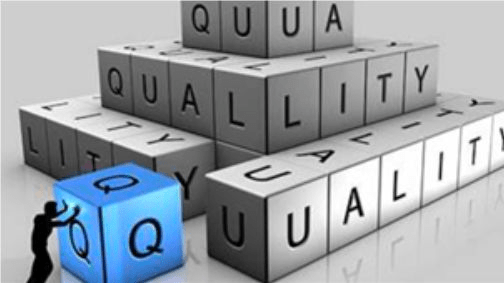
Quality is everyone’s responsibility.


Each minute of our life is a lesson but most of us fail to read it. I thought I would just add my daily lessons & the lessons that I learned by seeing the people around here. So it may be useful for you and as memories for me.

Who is “responsible” for quality? This is one of those interesting questions that on the surface of it seems really simple to answer depending upon your viewpoint … and yet the question itself hides a few thorny issues. Quality is not that simple. We all have the ability to add bits of quality and we all have the ability to take them away. In my opinion, there are various people who handle (certain aspects of) quality and those people are gatekeepers (for their area of quality).

There are so many role involves in Software Development Life Cycle (SDLC) and it is next to impossible to assign responsibility against all roles within the development team and this is where initiative comes into picture. Quality is one of the main factor in SDLC as it has direct relation with end users and when we speak about quality then one question comes into mind, i.e. “who is responsible for Quality?” Our understanding is, it is the job of a Software Tester. There is just no way that Testing can assure quality all on its own.

Quality is not the result of efforts of one single person. It is a combined effort of the whole team.

In general when you are working in a Development Team, many times we came across a statement like ‘I am developer and testing is not my responsibility’. Whenever I hear such statement , I recall this example from my father that “if your family has to be happy then you can’t assign a person in your family a role and responsibility of happiness and blame that person if something goes wrong”. If you want your family to be happy forever then it has to be happen with everyone participating in it!

Quality is not a one time activity. It is a continuous process.

Quality is the responsibility of everyone because no one person can successfully deliver a project by themselves. Usually, in the project world, projects are run by a number of people that are seldom from one organization.

It is imperative that each organization takes appropriate measures to ensure quality is engraved within its culture.

When quality expectations are understood by the project team; and each organization has set up in place a procedure to ensure quality control and assurance measures are taken, the project is more likely to be delivered to a better quality and hence more like to be a succes.

A simple example:

  1. During the Front End Loading of a project (aka. The Planning Stage of a Project Life Cycle), documents are the bulk of the deliversbles. Ensuring quality documents are submitted by the Consultant teams will definetly influence the project’s success.
  2. Likewise, during the Execution Stage (aka. Construction), the Contract shall ensure appropriate quality control and inspection tests are set up as it will also have an influence on the project’s success.


But is it just the Consultant’s responsibility in the first example or just the Contractor’s responsibility in the second?

I would argue it is not.

In my opinion Quality is just like Safety. Every person can contribute to having a safer construction site by identifying “near misses” or ensuring they take action when they see any unsafe act; likewise, every person can contribute to having a higher quality deliverables by understanding project’s quality expectations and delivering up to its standard.

I’ve been involved in software testing for 16+ years, working on major software implantations right across the globe, from Europe to United States, and India. Over that time I’ve seen testing evolve and go through various facelifts, but one thing is always true – you can’t have a good project without good testing!

During my stint in testing, I’ve realised something fundamental: Testers are just the information providers.

Testers alone can’t assure quality… but good testing can highlight low-quality. Through their various reports, testers provide the rest of your project with information needed to drive a quality solution.

Testing will never fix problems itself, but good testing will:

  • Accurately relay the status of a given solution at a given stage of development
  • Provide development with target areas to focus their efforts
  • Let the business know if the project is on track, or not
  • Let training get their ducks in a row ahead of the roll-out

I want to stress; you can achieve this with good testing. That means the right tools, correct coverage, appropriate test conditions, efficient prioritisation, and robust strategy.

It is not enough if one department or one person who is in charge of quality, works towards this. To achieve the goal of 100% perfect quality every employee connected to the company have to do their work on time, in an accurate manner.

I don’t mean that everyone needs to refocus on quality as a number one priority. Rather, other teams should work closely with the testers to understand the information and what to do with it. Despite what a lot of you think, testers aren’t the enemy. Other teams can and should use their information to make their own lives easier.

Accuracy of data and punctuality in the data delivery are very important aspects when it comes to proper Quality Management System.

As Aristotle has rightly said “Quality is not an act. It is a habit.” It has to become a way of life. Only if Quality is inculcated in the daily routine of an employee his or her work output will automatically be accurate and will also be punctual. All that we need to for this is to guide them properly. 

Quality is not an act! It is a habit!  We have to develop a culture of delivering quality products. You have to develop this culture not only in your work life or product you are developing but you need to develop this in your daily routine and this is how you can leave a Quality Life and develop a Quality Culture!

It’s really important to keep in mind that the term responsibility refers to the contextually proper sphere or extent of someone’s activities. When you call a team “Quality Assurance” that very name tends to imply that this is the team that is responsible. So don’t do that. Treat quality assurance as what it is: a function. It’s a function that stretches across multiple teams, embracing many roles. When you look at things this way then, yes, quality is potentially everyone’s responsibility but with the recognition that everyone has various areas of quality that they can reasonably influence and others that they have to rely on others to influence. What everyone can do is collaborate and communicate about those areas of influence, learning how to build a shared notion of quality throughout the organization.

In the end, the output of quality is primarily the result of all the people in the organisation so rather than blaming each other, let’s work as a team and deliver what is exactly needed. After all, there is only one team, and we’re all in it.

Please feel free to share your story and any lessons you learned, experienced, you came across in your life in the comments below. If you enjoyed this or any other posts, I’d be honored if you’d share them with your family, friends, and followers!

If you wish to follow my journey outside of my writing, you can find me on LinkedIn and Facebook

 
Leave a comment

Posted by on November 13, 2022 in Technical, Work Place


Tags: , , , , , , , ,

Learn to appreciate who deserve it


Each minute of our life is a lesson but most of us fail to read it. I thought I would just add my daily lessons & the lessons that I learned by seeing the people around here. So it may be useful for you and as memories for me.

Appreciation is the act of giving something or someone their proper value, and everybody has value. The value in a relationship is important because it lets a person know where they stand, and what they mean to you; appreciation is a way of letting that person know what you value.

In the workplace, appreciation generally means “recognition and enjoyment of the good qualities of someone or something. Appreciating someone is not tough task. It can be as simple as saying “thank you” for a job well done, for completing a project quickly, or for coming to a meeting prepared and ahead of time.

If you don’t show appreciation to those that deserve it, they’ll learn to stop doing the things you appreciate. 

In the workplace, appreciation plays a key role in creating a positive organisational culture and strengthening employee-leader relationships. Many studies have revealed that appreciation is one of the proven methods to motivate employees, make them more productive and committed to their jobs.

Importance Of Appreciation In The Workplace

Although appreciation is often confused with praise and recognition for achievements, real appreciation goes much further. It regards colleagues as human beings who are valuable because of their abilities, personality, and uniqueness. Regardless of their position in the company, each employee has enormous potential in different areas.

Appreciation is a fundamental human need in both professional and private life. We want to be appreciated by what we are, what we do, and what we achieve.

Appreciation should be a daily event and it is giving positive feedback and thanks for good ongoing work. It can be a simple thank you and positive feedback for a special project or special effort.

Appreciation keeps employees engaged. In addition to improving productivity, showing appreciation in the workplace also increases employee engagement and dedication.

Appreciation improves workplace morale. Showing appreciation to an employee creates a ripple effect in the workplace. An employee who feels appreciated is highly likely to show appreciation to their co-workers and other team members.

Appreciation improves productivity. When employees know their hard work is appreciated and recognised, they feel that their work is valued. And this motivates them to maintain and improve their great performance.

Appreciation boots moral. It has the largest effect on trust when it occurs immediately after a goal has been met, when it comes from peers, and when it’s tangible, unexpected, personal, and public.

Learn to appreciate others, And they will definitely appreciate you at right time.

When you appreciate someone, it indicates that you have recognized their effort. It may encourage them to go the extra mile. Giving recognition inspires greatness in others.

Final Thoughts

Appreciation is a powerful everyday tool that managers and leaders can use with their staff. Unfortunately, it is a greatly underutilized and many managers that I have worked with say “why should I have to say thank you and appreciate someone who is just doing their job that they are paid to do”.

Appreciation can be as simple as giving quality time to an employee and taking an interest in their career and personal development.

Appreciation can be shown to the whole team and this helps build engagement and a culture that everyone wants to be part of.

Please feel free to share your story and any lessons you learned, experienced, you came across in your life in the comments below. If you enjoyed this or any other posts, I’d be honored if you’d share them with your family, friends, and followers!

If you wish to follow my journey outside of my writing, you can find me on LinkedIn and Facebook


Tags: , , , , , ,

 
Design a site like this with WordPress.com
Get started