RSS

Tag Archives: ai

Why Healthcare IT Graveyard Is Getting Crowded


Each minute of our life is a lesson but most of us fail to read it. I thought I would just add my daily lessons and the lessons that I learned by seeing the people around here. So it may be useful for you and as memories for me.

I’ve spent more than a decade building healthcare products across Europe, Asia, and the U.S. I’ve led Quality, Product, and Delivery at scale. I’ve watched companies grow explosively, and I’ve watched companies vanish overnight literally.

And after 15 years working in healthcare, the pattern is painfully clear:

Healthcare tech doesn’t fail because of weak engineering. It fails because founders fundamentally misunderstand healthcare.

Here’s the uncomfortable truth — backed by recent, spectacular collapses.

The Graveyard Is Getting Crowded

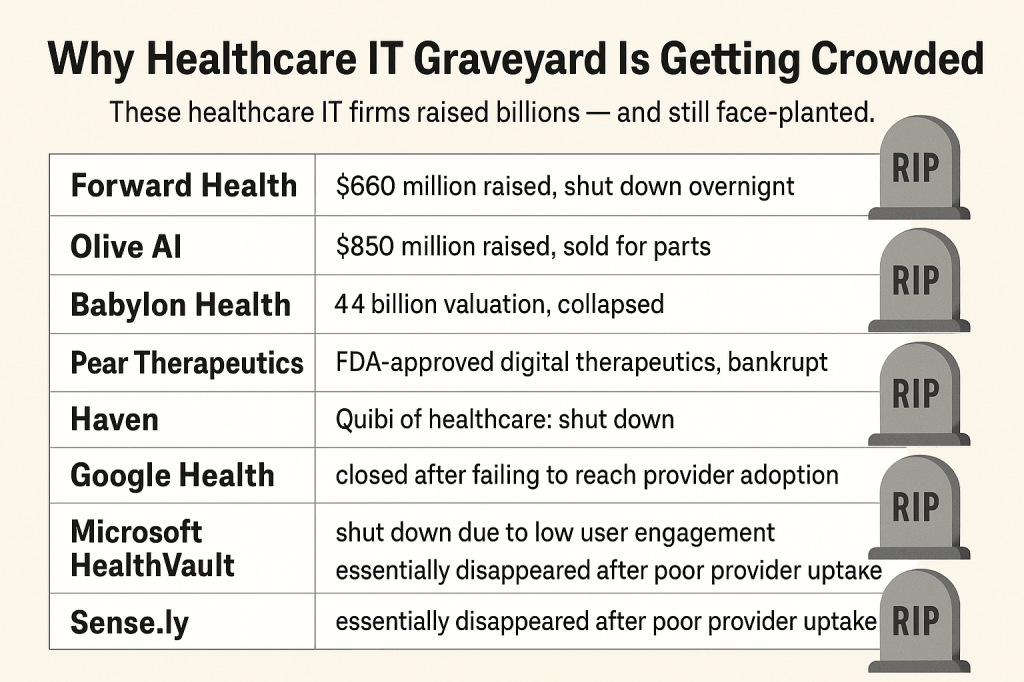
These aren’t small startups. These were the darlings of global healthcare tech:

  • Forward Health – $660M raised, shut down with zero patient transition
  • Olive AI – $850M raised, sold for parts after failing to justify ROI
  • Babylon Health – $4B valuation, blew up across multiple continents
  • Pear Therapeutics – FDA-cleared digital therapeutics, bankrupt
  • Quibi of Healthcare: Haven (Amazon–JPM–Berkshire) – shut down despite unlimited resources
  • Google Health (v1) – closed after failing to reach provider adoption
  • Microsoft HealthVault – shut down due to low user engagement and system complexity
  • Sense.ly (AI nurse avatar) – essentially disappeared after poor provider uptake
  • 23andMe Therapeutics spinout – quietly scaled back after no viable clinical revenue stream
  • Walgreens / Theranos fallout – major proof that hype beats due diligence in this sector
  • Proteus Digital Health (smart pill) – raised $500M, then bankrupt
  • Practice Fusion – sold for pennies after criminal investigations and failed EHR monetization
  • ZocDoc expansion failure – pivoted multiple times after failing to win provider-side economics
  • Oscar Health (several failed geographic launches) – struggled due to regulatory economics
  • IBM Watson Health – $3B+ investment, divested for $1B after clinical failures

This list is long. And growing.

The Core Misunderstanding: Healthcare Is Not a Tech Problem

Engineering-driven founders consistently misdiagnose the domain.

They believe healthcare = complex workflows + messy data + outdated UI.

Solve that and… success.

But healthcare is not a systems problem.

It is a trust problem wrapped in regulation, economics, and risk.

  • Lives are at stake — not convenience.
  • Medical decisions require validated evidence — not beta features.
  • Clinicians rely on reliability and accountability — not iteration velocity.
  • Patients don’t adopt new care models without months or years of trust-building.

Every failed company ignored these constraints.

The Integration Trap: The Silent Killer

This is where most companies die.

Healthcare runs on a brittle spine of EMRs, APIs, and legacy systems.

If you don’t integrate, you don’t exist.

  • Forward’s CarePods were genuinely innovative. But without seamless EMR connections, they became operationally useless.
  • Olive AI automated tasks internally… but could not standardize ROI across EMRs.
  • IBM Watson Health promised AI-driven oncology decisions. But the recommendations were inconsistent with evidence-based guidelines.

The rule:

If you don’t reduce workload inside the existing workflow, clinicians will ignore you.

No integration = no adoption.

No adoption = no revenue.

No revenue = shutdown.

Why Consumer Tech Logic Fails in Healthcare

Tech founders try to import playbooks from SaaS, marketplaces, and fintech:

  • “Move fast and break things”
  • “Launch MVP, iterate later”
  • “Acquire users, figure out monetization later”
  • “Data is the new oil”
  • “AI will replace inefficiencies”

These logics collapse immediately in healthcare:

  1. Healthcare data is not clean; 80% is unstructured.
  2. Interoperability is not an optional feature — it is the foundation.
  3. Clinicians require evidence, not velocity.
  4. Patients are not early adopters; they are risk-averse by necessity.

The market punishes anyone who treats healthcare like another consumer vertical.

The Reimbursement Illusion: Where Startups Bleed Out

This is the part Silicon Valley consistently ignores.

In healthcare, value is NOT determined by the end user.

Value is determined by:

  • payors
  • reimbursement codes
  • medical necessity rules
  • regulatory status
  • clinical outcomes data

A product can delight users and still die if:

  • there’s no CPT code
  • insurers won’t reimburse
  • the product doesn’t reduce provider workload
  • there’s no proven cost savings

Olive AI is the textbook example.

Automation sounded brilliant — but if hospitals can’t bill for it, the business collapses.

Pear Therapeutics had FDA clearance, efficacy data, and clinical logic.

Still died because payors refused to reimburse at scale.

Healthcare economics — not innovation — determine survival.

What Actually Works (and Why It Looks “Unsexy”)

The successful products in healthcare are almost never glamorous:

  • Automated population stratification
  • Scheduling optimization
  • Revenue cycle improvements
  • Medication adherence
  • Secure messaging
  • Chronic disease workflows
  • Interoperability middleware
  • Claims cleaning and fraud detection

Unsexy wins because it integrates, it reduces workload, it fits reimbursement, it avoids clinical risk, and it solves one painful problem extremely well.

The companies that succeed do the following:

  • Integrate seamlessly with EMRs
  • Prove ROI early
  • Reduce clicks, not add them
  • Earn clinical champions, not marketing awards
  • Build for the system as it is, not the system they wish existed
  • Grow slowly but sustainably — not explosively and unsafely

Healthcare rewards evolution, not revolution.

Forward Health’s Shutdown Is the Perfect Case Study

Forward turned off the lights overnight:

  • No transition pathway
  • Canceled appointments
  • Patients left stranded
  • Systems turned off immediately

This is what happens when a company:

  • optimizes for investor excitement instead of clinical safety
  • designs for TechCrunch instead of clinicians
  • prioritizes disruption over integration
  • treats healthcare as a retail subscription business instead of a regulated service

Patients pay the real cost of these failures.

The Real Pattern Behind Every Healthcare Tech Collapse

Let’s stop pretending these are isolated incidents.

The failures follow the same template:

  1. Overpromise with polished demos
  2. Underestimate the complexity of clinical workflows
  3. Blow capital on growth before solving integration
  4. Fail to secure reimbursement pathways
  5. Struggle to prove clinical and financial ROI
  6. Lose trust from clinicians
  7. Run out of money
  8. Collapse suddenly
  9. Patients and providers are left scrambling

Money and engineering talent are not substitutes for:

  • clinical insight
  • regulatory design
  • healthcare economics
  • trust-building
  • real-world workflow alignment

The Hard Truth

Healthcare rewards reliability over innovation.

Simple solutions outperform brilliant ones.

Integration beats disruption every time.

I’ve watched billion-dollar firms fail and small scrappy teams succeed.

The winners understood healthcare is a trust-based, evidence-driven system.

The losers thought they could brute force the market with capital and code.

They were wrong.

Your Turn

What healthcare product promised everything and delivered nothing?

If you wanna share your experiences, you can find me online in all your favorite places  LinkedIn and Facebook. Shoot me a DM, a tweet, a comment, or whatever works best for you. I’ll be the one trying to figure out how to read books and get better at playing ping pong at the same time.



Tags: , , , , , , , , ,

Top 20 Electronic Health Records (EHR) Systems in the World


Each minute of our life is a lesson but most of us fail to read it. I thought I would just add my daily lessons and the lessons that I learned by seeing the people around here. So it may be useful for you and as memories for me.

Digital transformation in healthcare continues to accelerate in 2025, with electronic medical records (EMR) and electronic health records (EHR) at the core of operational efficiency, patient engagement, and regulatory compliance. For healthcare businesses—ranging from multi-specialty hospitals to outpatient clinics—open source EHR/EMR platforms provide a unique combination of affordability, scalability, and adaptability.

In today’s healthcare ecosystem, Electronic Health Records (EHRs) are no longer just digital files they are the backbone of modern patient care. They provide clinicians with real-time access to a single, unified patient record, ensuring safer decision-making, fewer delays, and more time focused on patients rather than paperwork.

https://www.doctorsapp.in/blog/top-ehr-vendors

From my own work in healthcare, I’ve seen firsthand how difficult it can be for clinicians to deliver quality care without proper EHR systems. Consultations often get slowed down by flipping through scattered files, repeating lab tests because past results aren’t visible, or relying purely on memory to track complex patient histories. These gaps don’t just frustrate clinicians they can compromise patient safety and the overall patient experience.

An Electronic Health Record (EHR) is a type of healthcare software that digitally collects, organizes, and shares patient information. It ensures that medical data is available in a structured format and can be accessed by all authorized parties involved in patient care — from doctors, labs, and pharmacies to hospitals, registries, and patients themselves.

The idea of an electronic patient record isn’t new. More than 50 years ago, the first prototype — called the Problem-Oriented Medical Record (POMR) — was introduced. It brought together a patient’s full clinical history, a list of health problems, a treatment plan, daily progress notes, and a discharge summary. This framework set the stage for the EHRs we use today, with their focus on comprehensive records and continuity of care.

This is where effective EHRs make the difference. They:

  • Centralize patient data across clinics, hospitals, and pharmacies.
  • Reduce errors with accurate records of labs, allergies, and prescriptions.
  • Improve efficiency, freeing up more time for clinicians to engage with patients.
  • Enable population health insights, helping health systems manage risks and improve long-term outcomes.

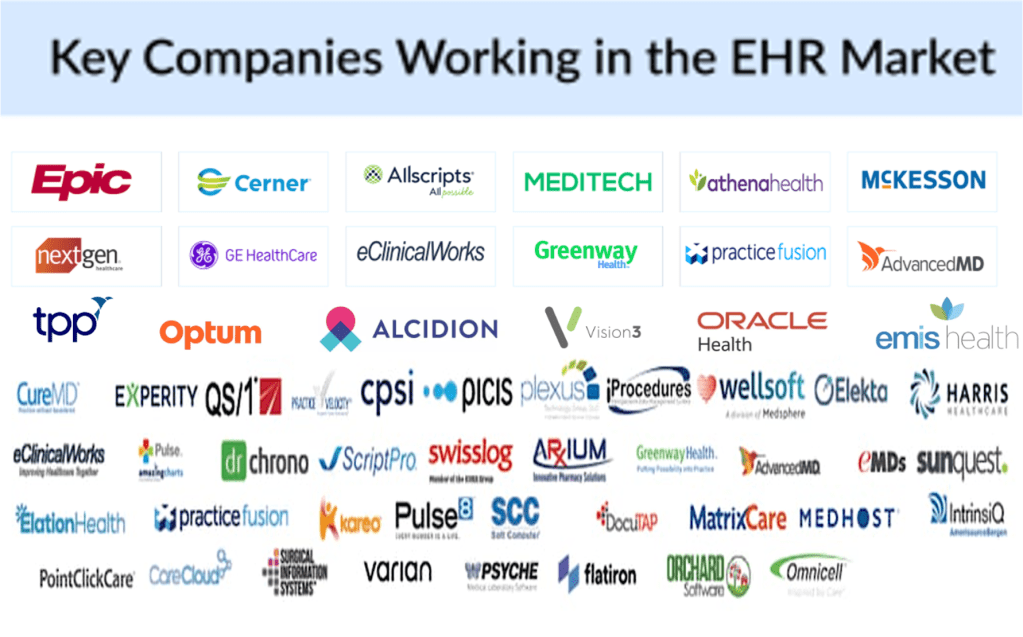
In short, EHRs empower providers to deliver better, safer, and more connected care. Below is a look at the Top 20 EHR systems worldwide, their origins, and standout features.

1. Epic Systems

  • Country: United States
  • Developer: Epic Systems Corporation
  • Features: Large hospital and academic medical center focus; interoperability; analytics and population health management; widely recognized leader in usability and scale.

2. Oracle Health (Cerner)

  • Country: United States
  • Developer: Oracle Health (formerly Cerner)
  • Features: Millennium platform; strong in hospitals and government health projects; open APIs; global presence; AI-driven decision support.

3. MEDITECH

  • Country: United States
  • Developer: MEDITECH Inc.
  • Features: Acute/community hospital focus; scalable for small hospitals; strong workflows for clinicians; growing international footprint.

4. Athenahealth

  • Country: United States
  • Developer: Athenahealth, Inc.
  • Features: Cloud-based; practice management, billing, telehealth; population health insights; ideal for ambulatory/outpatient practices.

5. NextGen Healthcare

  • Country: United States
  • Developer: NextGen Healthcare, Inc.
  • Features: Specialty-specific templates; patient portal and telehealth; revenue cycle management; good fit for mid-sized practices.

6. eClinicalWorks (eCW)

  • Country: United States
  • Developer: eClinicalWorks
  • Features: Cloud/mobile EHR; telehealth and patient engagement tools; affordable for small-medium practices; population health integration.

7. Greenway Health

  • Country: United States
  • Developer: Greenway Health, LLC
  • Features: Ambulatory EHR; built-in RCM; customizable workflows; responsive customer support.

8. Veradigm (Allscripts)

  • Country: United States
  • Developer: Veradigm (formerly Allscripts)
  • Features: Ambulatory solutions with open APIs; scheduling and billing; modular design for specialties; broad adoption across practices.

9. Practice Fusion

  • Country: United States
  • Developer: Veradigm (Practice Fusion)
  • Features: Affordable, web-based EHR; e-prescribing; lab integration; best for small practices.

10. AdvancedMD

  • Country: United States
  • Developer: AdvancedMD, Inc.
  • Features: SaaS-based EHR; telemedicine; customizable templates; analytics; tailored for small-to-mid practices.

11. Dedalus

  • Country: Italy
  • Developer: Dedalus Group
  • Features: Europe’s largest health IT vendor; integrated EHR, lab, and imaging systems; focus on interoperability across EU; strong NHS presence.

12. InterSystems TrakCare

  • Country: United States
  • Developer: InterSystems Corporation
  • Features: Global EHR with strong adoption in Europe, Middle East, APAC; unified patient record; advanced analytics and FHIR support.

13. EMIS Health

  • Country: United Kingdom
  • Developer: EMIS Health (part of Optum)
  • Features: Market leader in UK primary care; EMIS Web widely used; prescription ordering, patient portals; integration across GP and pharmacy.

14. SystmOne (TPP)

  • Country: United Kingdom
  • Developer: The Phoenix Partnership (TPP)
  • Features: Widely used in UK NHS primary and community care; real-time record sharing; mobile access for clinicians.

15. Vision (Cegedim)

  • Country: United Kingdom
  • Developer: Cegedim Healthcare Solutions
  • Features: Primary care EHR in the UK; intuitive prescribing; data sharing across practices; strong GP usability.

16. CareCloud

  • Country: United States
  • Developer: CareCloud, Inc.
  • Features: Cloud-based EHR + practice management; RCM and billing; telemedicine; customizable and user-friendly.

17. DrChrono

  • Country: United States
  • Developer: DrChrono, Inc.
  • Features: Mobile-first on iPad/iPhone; appointment scheduling; telehealth; ideal for small-mid practices.

18. Kareo Clinical

  • Country: United States
  • Developer: Kareo, Inc.
  • Features: Cloud-based; integrated billing and RCM; patient engagement; affordable for independent practices.

19. ModMed (Modernizing Medicine)

  • Country: United States
  • Developer: Modernizing Medicine, Inc.
  • Features: Specialty-specific EHRs (dermatology, ophthalmology, etc.); AI-powered coding/documentation; telehealth and analytics.

20. GE Healthcare (Centricity / Virence)

  • Country: United States
  • Developer: GE Healthcare
  • Features: Enterprise hospital deployments; integration with imaging; clinical documentation and order entry; still influential in hospital IT.

Final Thoughts

EHRs are not one-size-fits-all. While giants like Epic and Oracle Health dominate global hospitals, regional leaders like EMIS, SystmOne, and Vision play a vital role in UK primary care. Similarly, agile systems like DrChrono or Kareo empower small practices with affordable, cloud-based tools.

The real value of an EHR lies in how well it supports clinicians and patients together — enabling safer care, reducing waste, and building trust. As healthcare continues to digitalize, these systems will shape the future of how we deliver care worldwide.

If you wanna share your experiences, you can find me online in all your favorite places  LinkedIn and Facebook. Shoot me a DM, a tweet, a comment, or whatever works best for you. I’ll be the one trying to figure out how to read books and get better at playing ping pong at the same time.
 
Leave a comment

Posted by on September 2, 2025 in Technical, Work Place


Tags: , , , , , , , , , , ,

The End of Average Credentials: What It Means for Students, Careers, and Education

The End of Average Credentials: What It Means for Students, Careers, and Education

Introduction: The Changing World of Work

When I meet university students, one of the most common questions I hear is:

“Sir, I have a degree—why is it still so hard to get a good job?”

For decades, the formula was simple:

  1. Get into a university.
  2. Graduate with a degree.
  3. Land an entry-level job.
  4. Build expertise through promotions.

But today, that ladder is missing a few rungs.

Research from Harvard economists covering 62 million workers shows that firms adopting Artificial Intelligence (AI) are hiring 22% fewer junior employees. The steepest hiring drops are in wholesale, retail, and the very white-collar roles that graduates once relied on.

This isn’t just “no demand for average people.”

It’s no entry for average credentials.

As a coach, I tell my students:

“The future doesn’t ask where you studied—it asks what you can do.”


Why Degrees Are Losing Their Value

1. Credentials as Signals Are Breaking Down

Degrees used to be powerful signals. Employers didn’t know your skills, so they trusted your university’s name.

But now companies can test you directly—through projects, portfolios, and proof-of-work. The proxy has lost its power.

2. AI Boosts Productivity, But Not Judgment

AI is a powerful assistant. A junior analyst can use AI to build financial models in minutes. But here’s the real test:

  • Can they recognise when the numbers don’t reflect reality?
  • Can they connect insights across industries?
  • Can they detect shifts in the environment?

These are judgment calls—skills AI cannot replace.

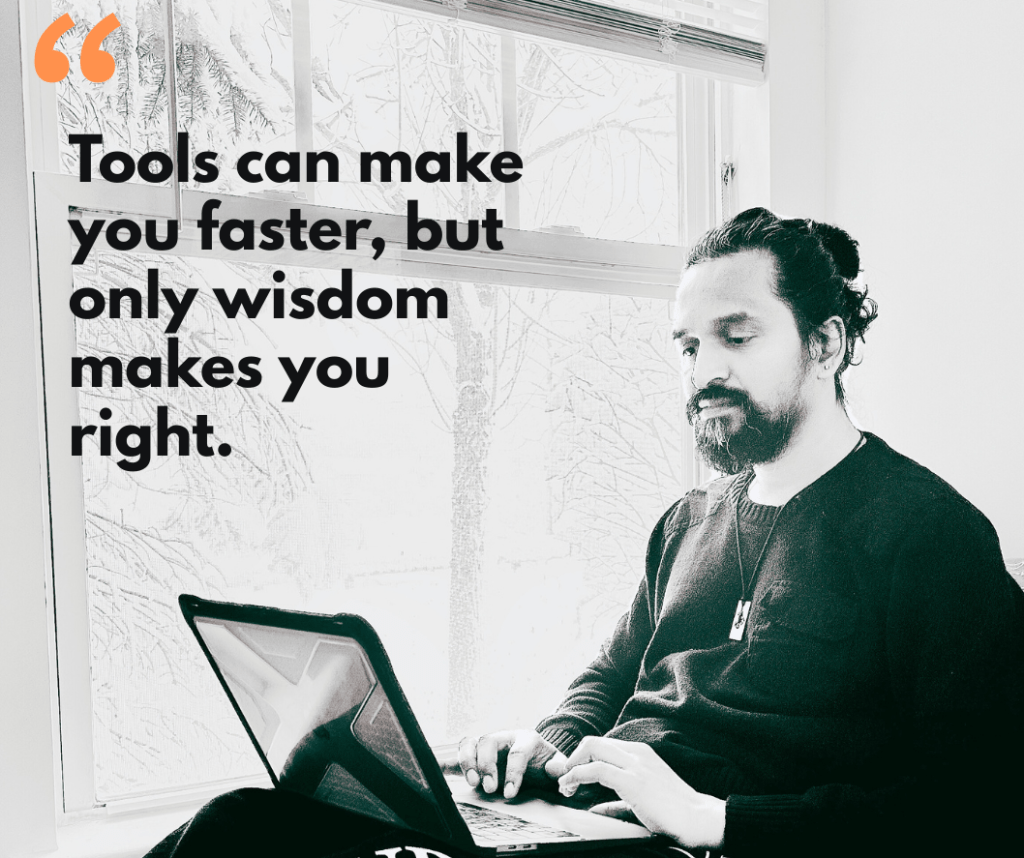
“Tools can make you faster, but only wisdom makes you right.”

3. The Mid-Tier Squeeze

  • Elite universities still open doors thanks to brand and alumni networks.
  • Bottom-tier colleges survive by serving local needs.
  • Tier 2 and Tier 3 schools, however, are squeezed the hardest. They produced the majority of white-collar workers, but their degrees no longer guarantee entry-level jobs.

And for the 26-year-old carrying student debt, this is not a theory—it’s a crisis.


What This Means for Graduates and Postgraduates

When I run workshops with students, I often ask:

“If degrees are losing value, what do you have that makes you stand out?”

Most look at me with hesitation. And that’s okay. Because the answer isn’t in the past—it’s in what you start building today.

Here are the steps every graduate and postgraduate can take right now:

Step 1: Build a Strong Portfolio

Your degree may get you noticed, but your portfolio gets you hired.

  • For coders: publish on GitHub.
  • For designers: showcase on Behance.
  • For writers: post on Medium or LinkedIn.
  • For analysts: share dashboards, case studies, or research.

I tell my mentees:

“A project in your portfolio speaks louder than a line on your CV.”


Step 2: Learn AI—but Add Your Own Judgment

Yes, you should learn AI tools. But don’t stop there. Employers are looking for the human layer—critical thinking, problem-solving, and judgment.

Ask yourself:

  • Can I spot when AI is wrong?
  • Can I explain complex ideas simply?
  • Can I frame the right problem before solving it?

Step 3: Seek Audition-Style Opportunities

The hiring game is shifting. Instead of degrees, companies want proof-of-work in action.

  • Freelancing projects, part-time consulting, internships—they’re the new auditions.
  • Even if it’s small, each project adds credibility.

I once coached a student who struggled to land interviews. We built a portfolio of small freelance projects. Within six months, he had three offers—not because of his degree, but because of his demonstrated work.


Step 4: Commit to Continuous Learning

The world no longer rewards “one-time learners.”

  • Take micro-certifications (Google, AWS, Microsoft).
  • Learn industry-specific tools in your field.
  • Invest in soft skills: leadership, adaptability, communication.

Remember:

“Your degree is your foundation. Your lifelong learning is the building you live in.”


Step 5: Build Networks, Not Just Resumes

When I interact with hiring managers, I hear this again and again:

“We trust recommendations more than CVs.”

That’s why networks matter.

  • Join communities, professional groups, and alumni networks.
  • Find mentors who can guide you.
  • Attend events, webinars, hackathons.

Opportunities often come through people, not job boards.


Alternate Career Opportunities in the AI Era

Not everyone needs to join a big corporate. In fact, many students I coach find greater success in alternative paths.

1. Freelance & Gig Economy

Skill-first platforms like Upwork and Fiverr reward competence, not degrees.

2. Entrepreneurship & Startups

AI has lowered the cost of starting a business. Students can launch services, apps, or consultancies with minimal capital.

3. Creator Economy

Blogging, YouTube, and online teaching can turn knowledge into income. I know students who earn more from teaching coding on YouTube than from a corporate salary.

4. Domain + Tech Hybrids

  • Finance graduates with AI skills → fintech analysts.
  • Law graduates with AI skills → legaltech innovators.
  • Doctors with data skills → healthtech leaders.

5. Social Impact Roles

NGOs, governments, and international bodies increasingly seek data-driven talent for public good.


How the Education System Must Transform

As someone who often collaborates with universities, I see the gap clearly: we are preparing students for jobs that no longer exist.

Here’s how education must evolve:

  1. From Marks to Portfolios – Every graduate should leave with proof-of-work, not just transcripts.
  2. From Final-Year Projects to Industry Projects – Universities must partner with companies for real challenges.
  3. From Memorisation to Critical Thinking – Teach students how to question, test, and synthesise.
  4. From Fixed Curriculum to Modular Learning – Let students mix AI with finance, design with psychology, law with technology.
  5. From Local Degrees to Global Credentials – Integrate certifications from global platforms into the university experience.

“Education must prepare students for the future they will face, not the past we are nostalgic about.”


The New Career Path

The old path looked like this:

Degree → Junior Role → Steady Promotion

The new path looks like this:

Portfolio → Paid Audition → Accelerated Growth

This is not theory—it’s already happening in AI-driven companies.


Conclusion: Building Your Own Proof of Work

To every student and young professional reading this, here’s my message:

  • Don’t wait for your degree to “unlock” a career.
  • Start building your proof-of-work now.
  • Use AI wisely, but bring your judgment to the table.
  • Stay curious, keep learning, and expand your network.

The credential collapse is real. But it is not the end of opportunity. In fact, it’s the start of a new era—where your skills, your creativity, and your resilience matter more than ever.

“The world doesn’t need more degrees. It needs more doers, thinkers, and leaders. Be one of them.”

If you wanna share your experiences, you can find me online in all your favorite places  LinkedIn and Facebook. Shoot me a DM, a tweet, a comment, or whatever works best for you. I’ll be the one trying to figure out how to read books and get better at playing ping pong at the same time.


Tags: , , , , , , , , , ,

AI in QA: More Than Just a Trend


Each minute of our life is a lesson but most of us fail to read it. I thought I would just add my daily lessons and the lessons that I learned by seeing the people around here. So it may be useful for you and as memories for me.

In today’s fast-moving software development world, Quality Assurance (QA) must be scalable, intelligent, and efficient. The solution? AI-powered QA.

Many fear AI might replace testers, but the reality is different—AI enhances and accelerates the QA process, allowing testers to focus on high-value tasks rather than repetitive ones.

In this article, we’ll explore:

How AI is transforming QA

The best AI-powered QA tools

10 practical steps to implement AI in QA

Let’s dive in!

Why AI in QA? More Than Just a Trend

Research shows that integrating AI into QA can:

Boost testing efficiency by automating repetitive tasks

Improve accuracy by reducing human errors

Prioritize test cases intelligently using predictive analytics

Enhance UI/UX validation through advanced visual testing

An AI-first approach to QA isn’t just a futuristic idea—it’s a smart, practical step toward better software quality.

How AI is Transforming QA

1️⃣ Test Automation

AI-driven frameworks create self-healing test scripts that adapt to application changes, reducing script maintenance.

🛠 Tools: Functionize, Testim

2️⃣ Predictive Analytics

AI predicts which test cases are most critical, helping teams reduce execution time while improving test effectiveness.

🛠 Tools: Launchable by CloudBees

3️⃣ Synthetic Test Data

AI generates realistic and diverse test data, covering edge cases that are hard to replicate manually.

🛠 Tools: Gretel, GenRocket

4️⃣ Visual Validation

AI-based visual validation tools detect even the smallest UI/UX changes, ensuring smooth user experiences.

🛠 Tools: Applitools, Percy

10 Actionable Steps to Implement AI in QA

1️⃣ Start with a Clear Strategy

Define what you want AI to improve—speed, accuracy, test coverage? Set clear KPIs to measure success.

2️⃣ Choose the Right Tools

Not all AI-powered tools are the same. Pick tools that align with your testing framework, team skills, and application needs.

3️⃣ Train Your Team

AI is only as good as its users. Upskill your testers so they can leverage AI effectively.

4️⃣ Integrate with CI/CD

Make AI a part of your Continuous Integration/Continuous Deployment (CI/CD) pipeline to enable real-time testing.

5️⃣ Focus on High-Value Tests

AI works best when identifying patterns. Prioritize areas where automation delivers the most impact.

6️⃣ Use Synthetic Data

AI-generated test data helps cover security, performance, and edge case scenarios.

7️⃣ Leverage Predictive Analytics

AI can prioritize test cases dynamically, optimizing test execution time.

8️⃣ Automate Repetitive Tasks

Use AI to automate test script maintenance, data generation, and test execution.

9️⃣ Monitor and Adjust AI Models

AI isn’t set-and-forget. Continuously optimize your AI models for better accuracy.

🔟 Foster Cross-Team Collaboration

QA, development, and operations teams must work together to integrate AI successfully.

AI in QA: The Future is Here

AI in QA isn’t just an experiment—it’s the future of software testing. The key takeaway?

AI should amplify, not replace, human testers.

AI makes QA smarter, more efficient, and more scalable.

AI-powered testing isn’t just about automation—it’s about intelligent quality assurance.

By integrating AI into QA, organizations can ship high-quality software faster and with confidence.

Are you ready to adopt AI in your QA process? Let’s discuss in the comments!

If you wanna share your experiences, you can find me online in all your favorite places  LinkedIn and Facebook. Shoot me a DM, a tweet, a comment, or whatever works best for you. I’ll be the one trying to figure out how to read books and get better at playing ping pong at the same time.
 
Leave a comment

Posted by on January 9, 2025 in Technical, Work Place


Tags: , , , , , , , , , ,

 
Design a site like this with WordPress.com
Get started